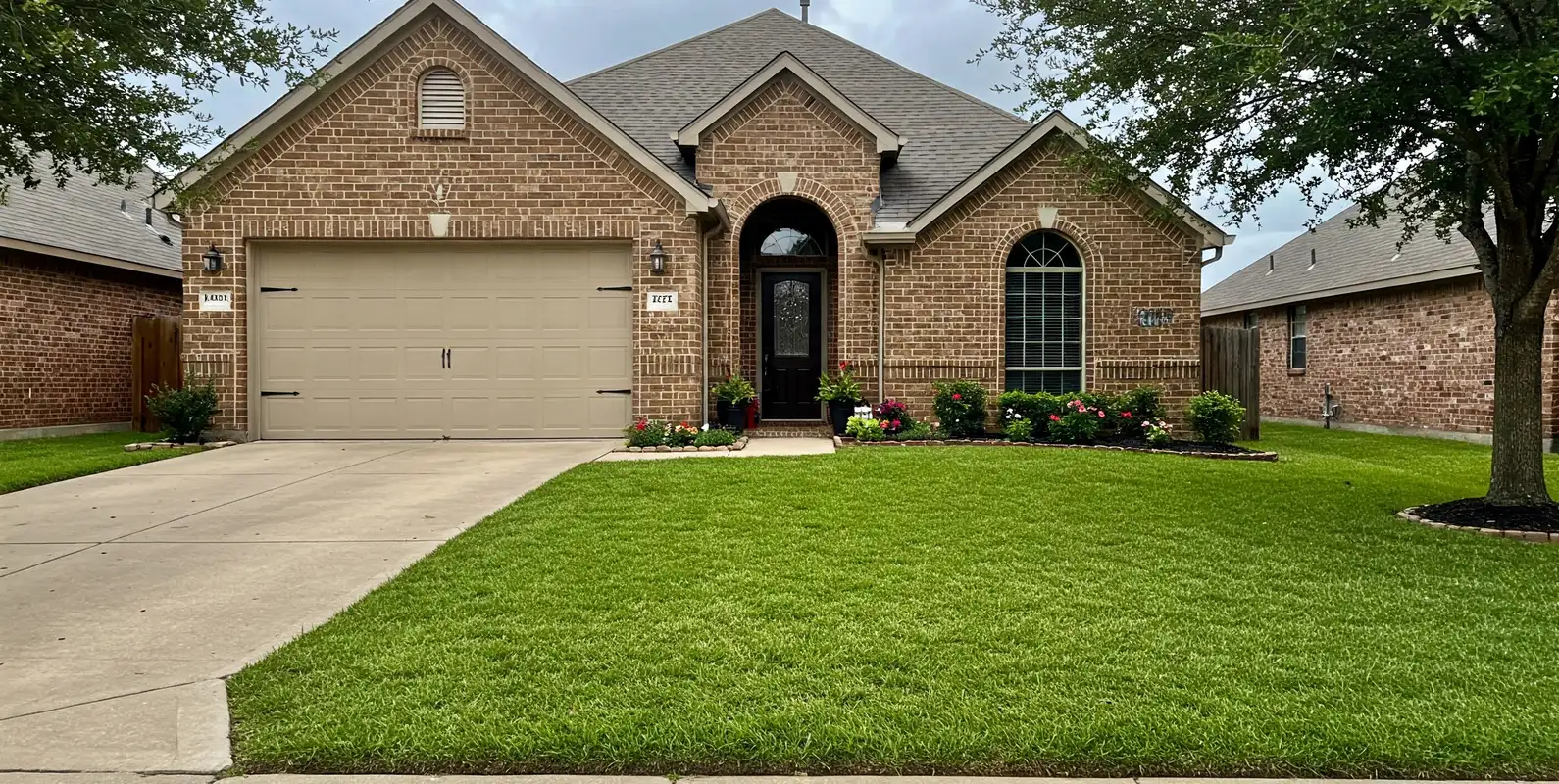
The best grass for Houston is usually St. Augustine if your yard has some shade, and Bermuda or Zoysia if it gets full sun or heavy foot traffic. St. Augustine is the most shade-tolerant warm-season grass. Bermuda handles drought and wear best but needs full sun. Zoysia sits in the middle, with good drought tolerance and a dense, soft feel.
The same advice holds for Fort Bend County yards in Sugar Land, Richmond and Rosenberg. Below we compare the three grasses using guidance from Texas A&M AgriLife Extension, plus tips from our years of laying sod in the Houston area.
St. Augustine vs. Zoysia vs. Bermuda at a Glance
These ratings come from Texas A&M AgriLife's Turfgrass Selection for Texas guide.
| St. Augustine | Zoysia | Bermuda | |
|---|---|---|---|
| Shade tolerance | High | Moderate to high | Very low to low |
| Drought tolerance | Good | Very good | Very good to excellent |
| Traffic tolerance | Low | Moderate to high | High |
| Salt tolerance | Good | Moderate to high | Moderate to high |
| Disease potential | High | Low to moderate | Low to moderate |
| How it is planted | Sod (no seed available) | Mostly sod | Sod or sprigs (common types from seed) |
| Lawn mowing height | 2.5 to 4 in. | 1 to 2.5 in. | 1 to 2.5 in. (hybrid) |
Mowing heights are from AgriLife's mowing guide for warm-season grasses.
Why Houston Lawns Are Different
Houston is warm and wet. The National Weather Service lists 51.84 inches of rain per year at Bush Intercontinental Airport (1991 to 2020 normals). Rain often comes in heavy bursts, followed by hot, dry stretches in late summer.
That mix favors warm-season grasses that can handle heat and humidity. It also means fungus diseases show up often. Good drainage, smart watering and the right grass for your sun and shade make the biggest difference.
St. Augustine: Best for Shady Houston Yards
St. Augustine is a top pick for many Houston yards. AgriLife calls it "the most shade-tolerant of the warm-season turfgrasses" and says it is best adapted to Southeast Texas.
Pros:
- Handles more shade than any other warm-season grass
- Thick, wide blades that crowd out many weeds
- Tolerates heat, humidity and salt well
Cons:
- Does not handle heavy foot traffic
- Needs more water than Bermuda or Zoysia in a drought
- Higher disease and insect risk
AgriLife's St. Augustinegrass Lawn Management guide says it still needs at least 4 to 6 hours of light a day. It also notes that seed is not available, so it is planted as sod, sprigs or plugs.
Common varieties: Floratam has the best drought tolerance but needs at least 6 hours of direct sun. Palmetto needs about 5 hours. Raleigh has good shade and cold tolerance but is more prone to disease. CitraBlue showed very good gray leaf spot resistance and excellent shade tolerance in trials.
Watch for: chinch bugs in hot, dry summer weather, large patch in spring and fall, gray leaf spot in warm, wet summers, and take-all root rot.
Zoysia: A Dense, Tough Middle Ground
Zoysia forms a thick, soft carpet that many homeowners love. AgriLife's Zoysiagrass page lists its strengths as shade, drought, cold and traffic tolerance. Its weak points are thatch buildup and slow recovery from damage.
Pros:
- Better drought tolerance than St. Augustine
- Handles light to moderate shade
- Dense turf that stands up to moderate foot traffic
Cons:
- Not as shade-tolerant as St. Augustine
- Grows slowly, so bare spots take longer to fill in
- Builds up thatch over time, which may need to be removed
Zoysia is best planted from sod. Common sod varieties include Zeon, Palisades and Empire. Like St. Augustine, Zoysia can get large patch in cool, wet weather.
Bermuda: Best for Full Sun and Heavy Use
Bermuda is the workhorse of warm-season grasses. AgriLife says it is "very tolerant of drought and traffic and requires full sunlight."
Pros:
- Best drought and wear tolerance of the three
- Recovers fast from damage
- Great for kids, dogs and busy backyards
Cons:
- Does poorly in shade
- Grows fast and needs frequent, low mowing
- Spreads into flower beds unless you edge it
AgriLife's Bermudagrass Lawn Management guide notes that hybrid Bermuda is planted as sod or sprigs because its seed is often sterile. Tifway 419 and TifTuf are common hybrid sod choices. Celebration and TifGrand offer better shade tolerance than most Bermudas.
Which Grass Should You Choose?
- Mostly shade from oaks or two-story homes: St. Augustine, with a shade-tolerant variety.
- Full sun and heavy play: Bermuda.
- Full sun to light shade, and you want a dense, soft lawn: Zoysia.
- Deep shade with less than 4 hours of light: Grass will struggle. Consider planting beds, mulch or artificial turf instead. See our artificial turf cost guide to compare.
Many Houston yards have both sun and shade. It's fine to plan for that. A good installer will look at how many hours of light each area gets before picking the grass.
When to Lay Sod in Houston
AgriLife's Turfgrass Establishment for Texas guide says sod can go down any time of year. The best time is when the grass is actively growing, in spring, late summer and fall.
For new sod, water enough to wet the soil 2 to 3 inches below the sod, and avoid overwatering. After about two weeks, start spacing out waterings. For established St. Augustine, AgriLife suggests watering one to two times per week, between 3 a.m. and 9 a.m. A well-set sprinkler system makes this easy.
How We Install Sod
Our family-run crew has worked on Houston-area yards for more than 30 years. We remove the old grass and weeds, grade the soil so water drains away from your home, and lay fresh sod edge to edge. Then we show you how to water it while it roots. We install sod in Houston, Rosenberg, Sugar Land, Richmond and nearby areas.
Get a Free Sod Quote
Not sure which grass fits your yard? Contact Houston Landscape Images for a free site visit. We'll check your sun, shade and drainage, then give you an itemized quote for new sod installation.