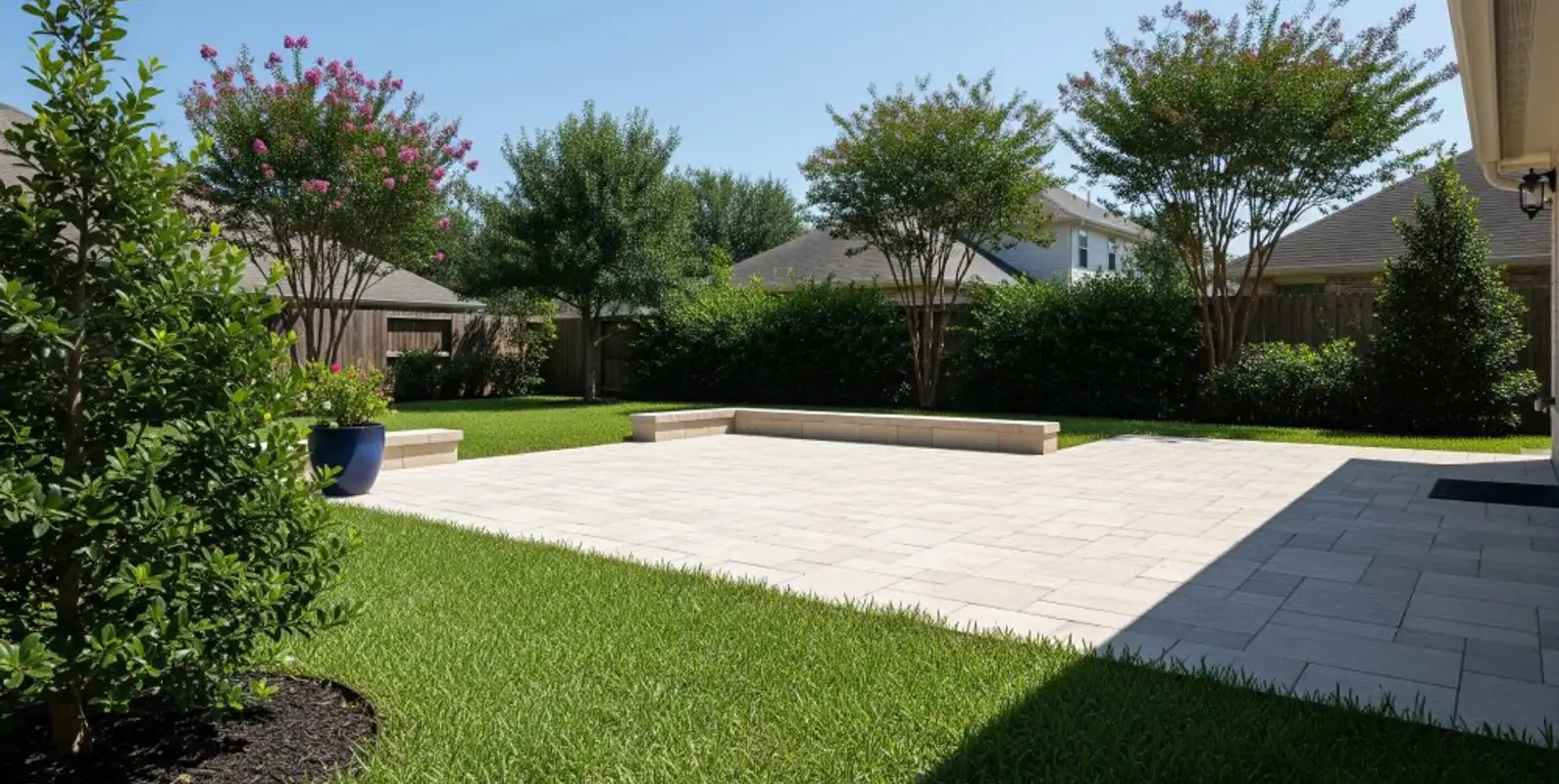
For most Houston patios, pavers handle heat and shifting clay soil better, while concrete costs less up front. Pavers sit on a flexible gravel base, so they can move a little without cracking, and a single paver can be lifted and reset. Poured concrete is fast and budget-friendly, but a slab can crack when the ground under it moves.
Houston summers are hard on outdoor surfaces. Long stretches of heat, heavy humidity, sudden storms and clay soil all take a toll. Houston Landscape Images has built patios in the Houston area for more than 30 years, and "concrete or pavers?" is one of the most common questions we hear. This guide breaks down the pros and cons so you can choose with confidence. You can also see our work on the patio installation page.
Table of Contents
- Why Patio Materials Matter in Houston's Climate
- Concrete Patios in Houston: Pros and Cons
- Paver Patios in Houston: Pros and Cons
- Which Patio Handles Houston Heat Better?
- Cost: Concrete vs. Pavers
- Which Adds More Curb Appeal?
- Let HLI Help You Choose
Why Patio Materials Matter in Houston's Climate
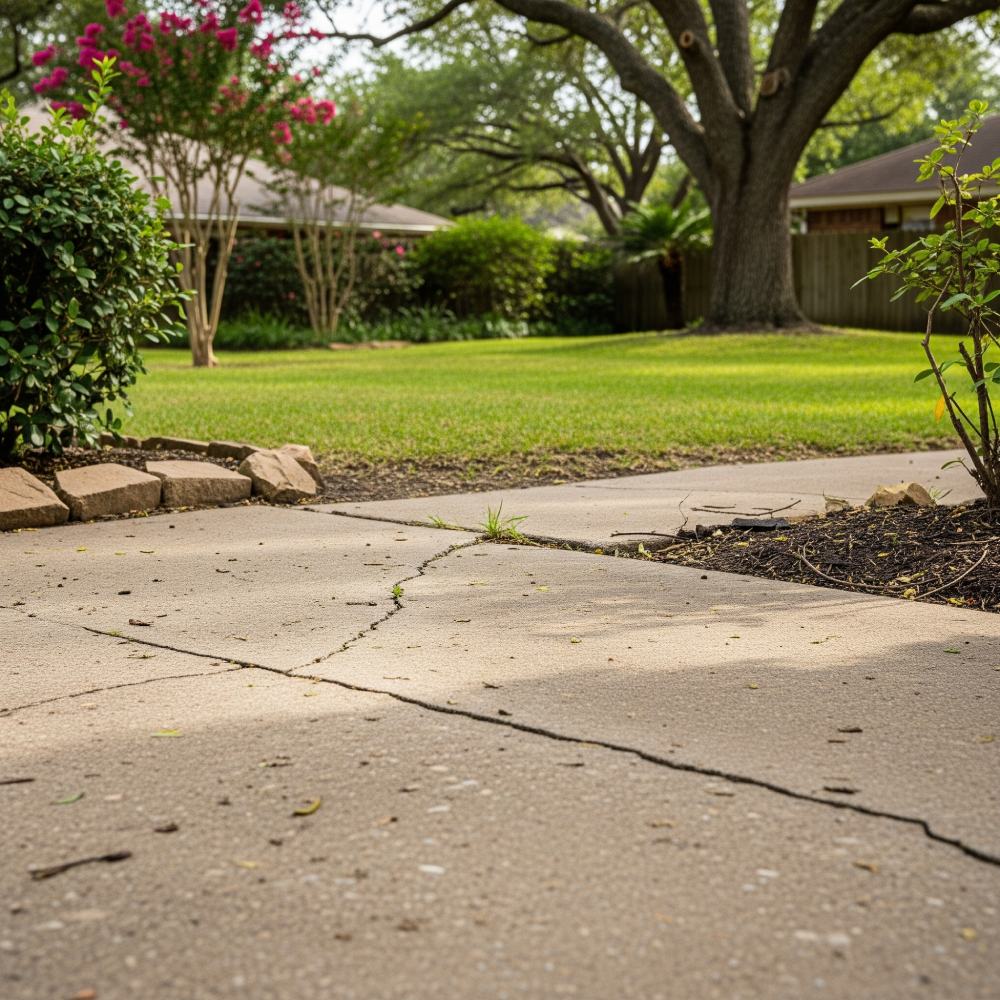
Houston's climate puts more stress on outdoor materials than many cities. Hot summers, tropical humidity and heavy storms can wear down a patio that wasn't built right.
Then there's the soil. Much of the Houston area sits on clay that swells when wet and shrinks when dry, as Texas A&M AgriLife explains. That movement can lead to cracks, shifting and drainage problems. Your patio material has to handle both the weather above and the ground below.
That's why we never use a one-size-fits-all approach. We plan every patio around the yard, how you will use it, and how each material performs here.
Concrete Patios in Houston: Pros and Cons
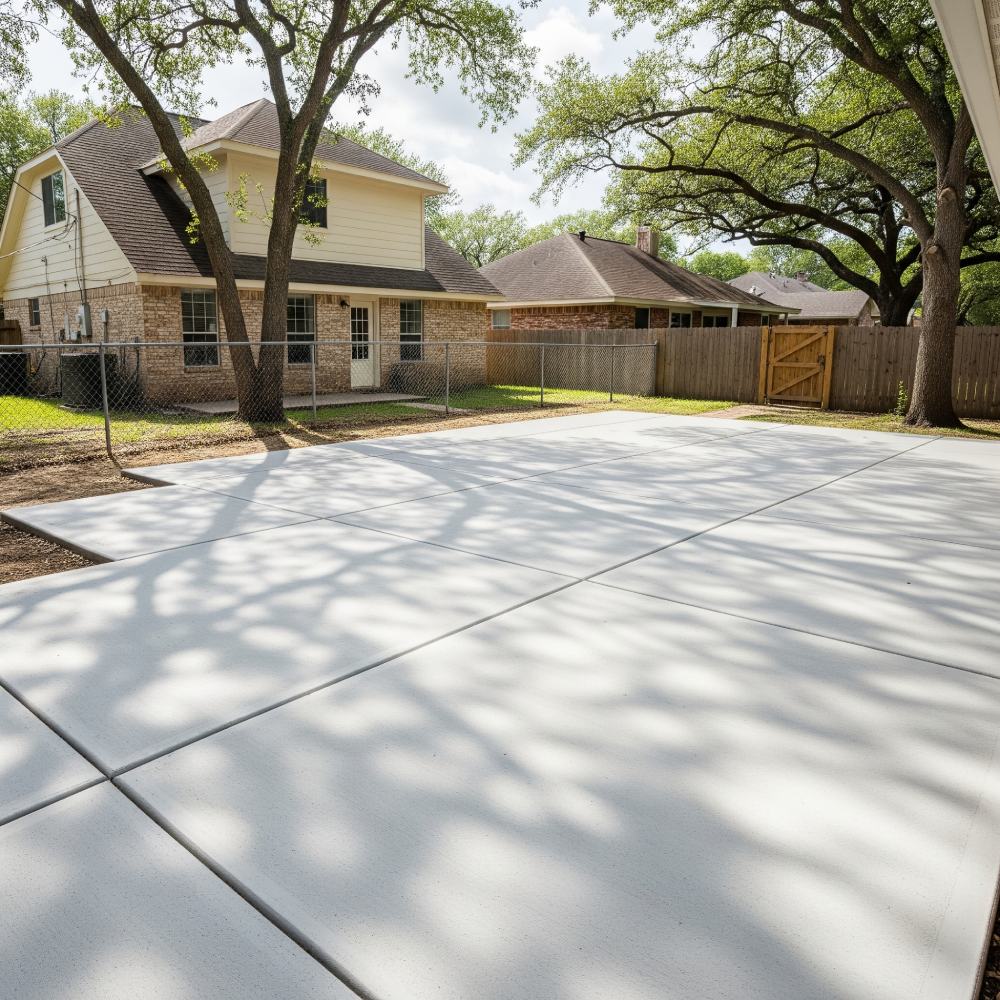
Concrete patios give a clean, simple look at a lower cost. Poured and finished well, concrete makes a smooth, durable surface for outdoor kitchens, pool decks and seating areas.
Pros of concrete patios:
- Lower cost for large areas
- Fast to install
- Can be stamped, stained or colored
- Easy to slope for drainage
Cons to consider:
- Can crack when clay soil moves
- Gets hot in direct sun, especially darker colors
- Cracks are hard to hide, and big repairs can mean replacing sections
- Stains can set in unless the surface is sealed
Concrete is a solid pick for a budget-friendly patio. It needs a well-prepared base, control joints and a good seal to hold up over time. If your slab is sound but worn, a concrete overlay can refresh the look.
Paver Patios in Houston: Pros and Cons
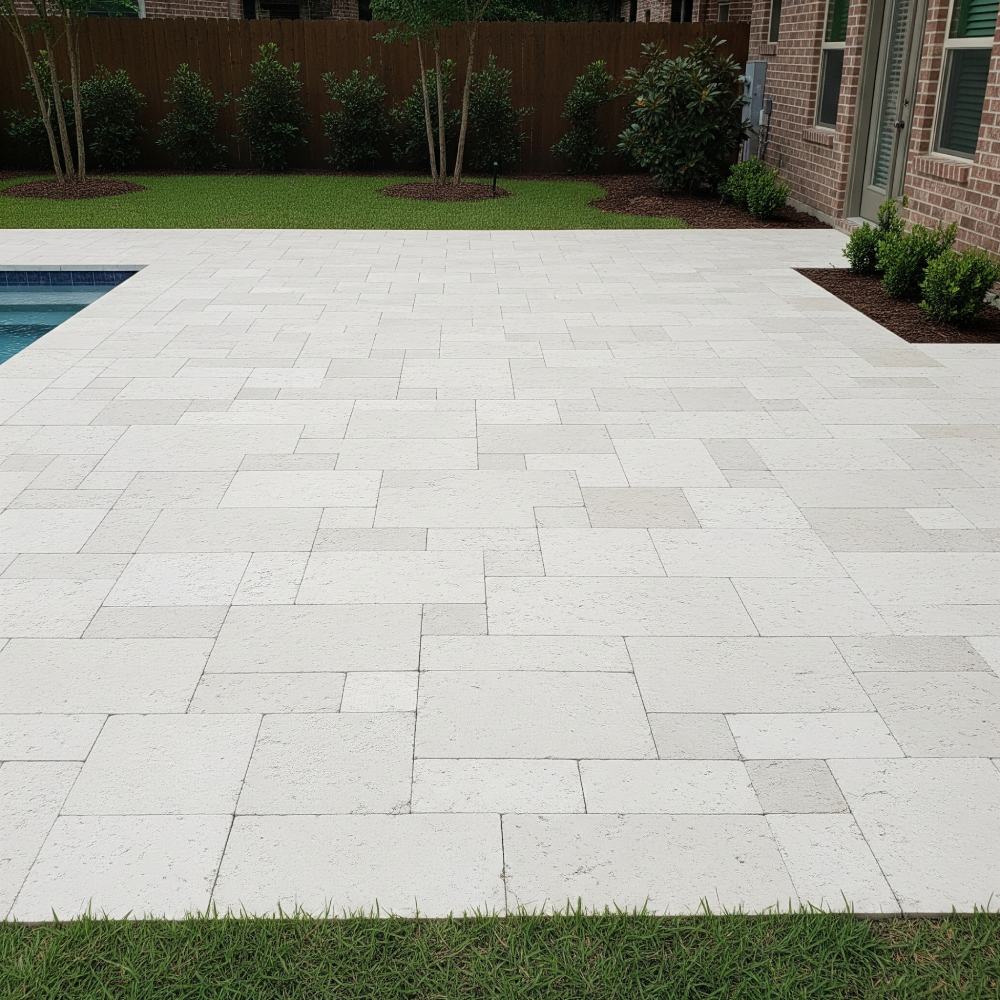
Pavers are individual units made from concrete, brick or natural stone. They are laid over a compacted gravel base with sand in the joints. The paver industry group CMHA explains that this kind of base "accommodates minor settlement without surface cracking."
Pros of paver patios:
- The flexible base handles soil movement better
- Single pavers can be lifted and replaced without tearing out the whole patio
- Light colors and natural stone like travertine stay cooler than dark surfaces
- Many colors, shapes and patterns
Cons to consider:
- Higher up-front cost
- Weeds or ants can show up in joints without good base prep and joint sand
Pavers are a great fit if you want a patio that adapts to shifting soil and looks custom. For a stone comparison, read pavers vs. flagstone for Houston's clay soil.
Which Patio Handles Houston Heat Better?
On a July afternoon, surface temperature matters, especially for bare feet and pets.
- Plain or dark concrete soaks up heat and can get very hot by midday.
- Light-colored pavers reflect more sunlight and stay cooler.
- Travertine pavers are popular around pools because they stay more comfortable underfoot than darker surfaces, and their texture helps with grip.
If summer comfort is your top concern, light pavers or natural stone usually beat concrete. Adding shade with a patio cover helps with any material.
Cost: Concrete vs. Pavers
These are typical market ranges from public cost guides, not our prices. We give every homeowner a free, itemized quote.
| Patio type | Typical installed cost | Est. total for 500 sq ft | Source |
|---|---|---|---|
| Broom-finish concrete | $6 to $13 per sq ft | $3,000 to $6,500 | HomeGuide |
| Stamped concrete | $8 to $19 per sq ft | $4,000 to $9,500 | HomeGuide |
| Concrete pavers (Houston) | $8 to $15 per sq ft | $4,000 to $7,500 | Angi (Houston) |
| Travertine pavers | $15 to $27 per sq ft | $7,500 to $13,500 | HomeAdvisor |
The 500-square-foot totals are simple math from each source's per-square-foot range. Base prep, drainage, access and pattern all change the final number.
Which Adds More Curb Appeal?
Both concrete and pavers can look great. Stamped concrete can mimic stone for less money. Pavers and natural stone often look more high-end, and they photograph well when it's time to sell.
In established neighborhoods like Bellaire, West University and Memorial, a well-built patio paired with an outdoor kitchen or good landscaping can help a home stand out.
Bottom line: If you want the lowest up-front cost, concrete is hard to beat. If you want a patio that handles Houston's clay soil, stays cooler and can be repaired in small sections, pavers usually win over the long run.
Let HLI Help You Choose the Right Patio
At Houston Landscape Images, we've designed and built patios across the Houston area for more than three decades. We know how heat, humidity and soil movement affect patios here, and we recommend materials and methods that last.
Whether you're leaning toward stamped concrete or a custom paver patio, we'll walk your property, talk through your goals and help you build a patio that works for years. Contact us for a free consultation and an itemized estimate.