Pavers vs. flagstone on Houston's clay soil comes down to this: concrete pavers are usually the better value and the most forgiving on shifting ground, while flagstone gives a more natural look for a higher price. Both last for decades when they sit on a thick, well-compacted gravel base. Pavers typically cost about $8 to $15 per square foot installed in Houston. Dry-laid flagstone runs about $15 to $32.
Below we explain why Houston soil matters, how each material handles it, what each costs, and how to choose. For a look at our patio work, visit our patio installation page.
Why Houston Clay Soil Matters for Your Patio
Much of the Houston area sits on clay that swells when it gets wet and shrinks when it dries out. Texas A&M AgriLife explains that these soils contain smectite, a clay mineral that "swells in size when wet and shrinks when dry." It notes these soils dominate the Blackland Prairies and the Gulf Prairies and Marshes regions of Texas.
A University of Houston geotechnical presentation notes that most of Houston, except the northwest part of the city, sits on the Beaumont formation. Most of those clays rate high to very high for shrink and swell.
What does that mean for a patio? After a wet spring and a dry August, the ground under your patio can rise and settle. A rigid slab can crack. A flexible surface can move a little and stay in one piece.
How Pavers Handle Shifting Ground
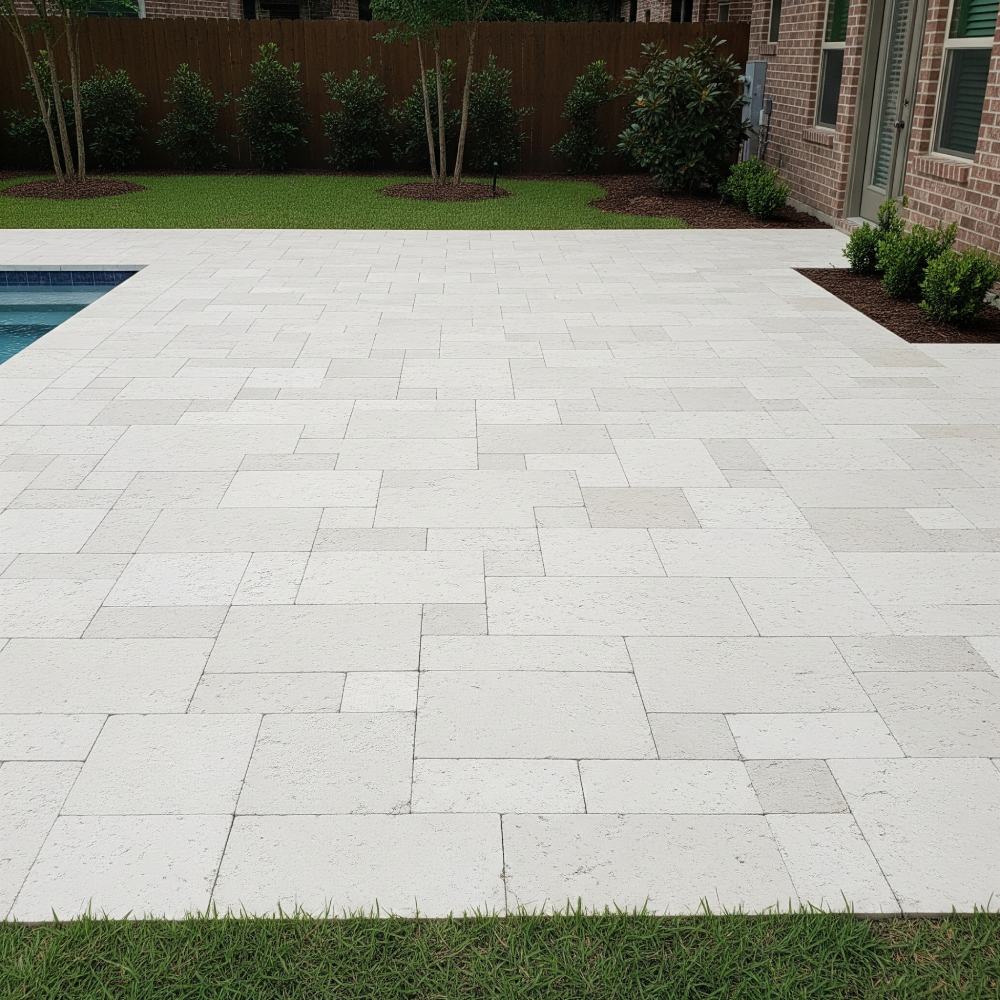
Concrete pavers are small units set on a compacted gravel base, with sand in the joints. The industry group for pavers, CMHA (formerly ICPI), explains that the aggregate base "accommodates minor settlement without surface cracking." The many sand-filled joints let the surface flex instead of snapping.
If one area sinks, the crew can lift those pavers, fix the base and set the same pavers back down. That is a big plus on Houston clay.
The base is the key. CMHA guidance calls for at least 4 inches of compacted base for patios over well-drained soil. It says wet or weak soils need a thicker base, and it allows a geotextile fabric over clay. On Houston clay, we plan for a deeper base than the minimum.
How Flagstone Handles Shifting Ground
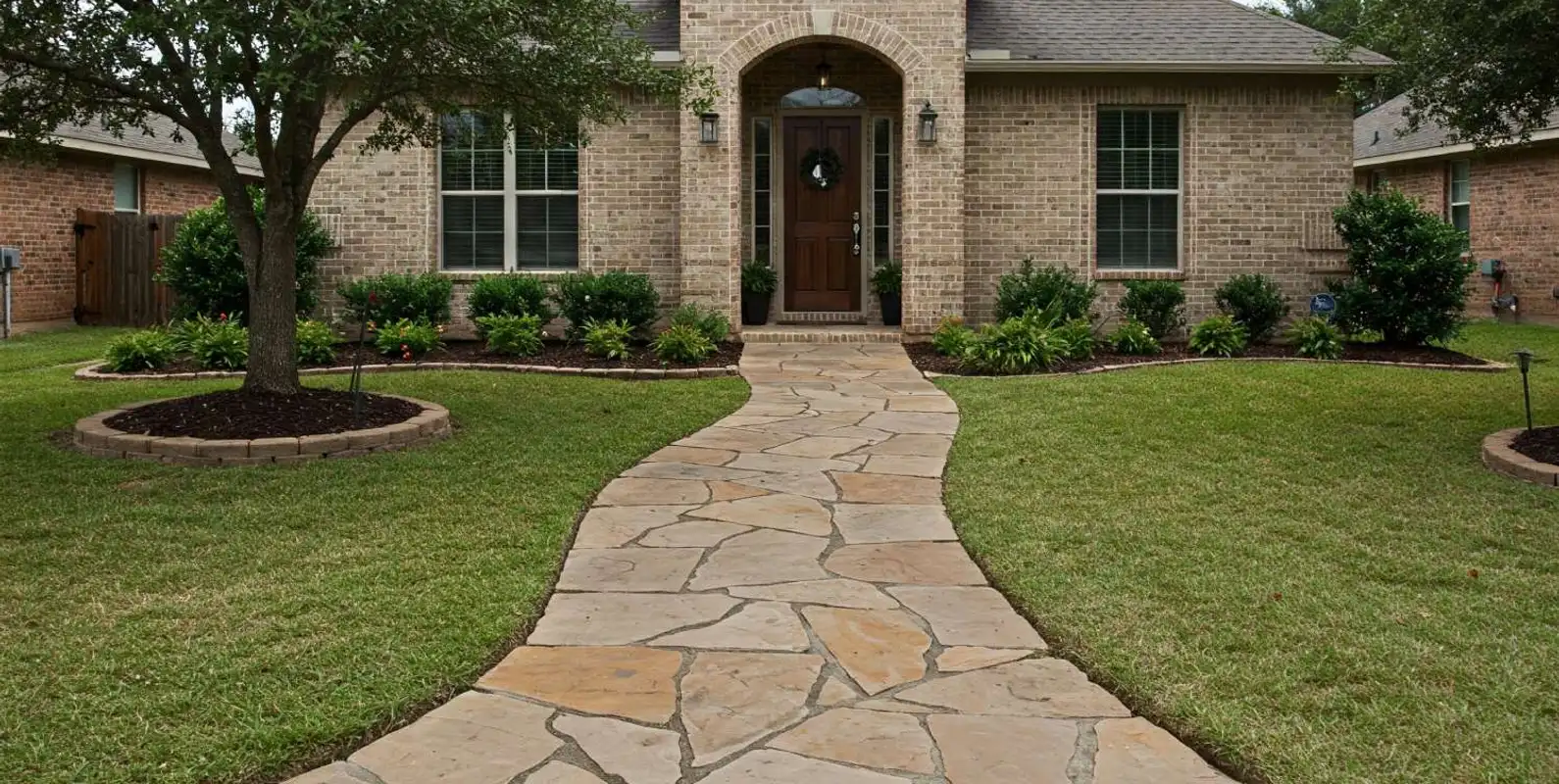
Flagstone is natural stone split into flat, irregular pieces. It can be installed two ways, and they behave very differently on clay.
- Dry-laid flagstone sits on a compacted gravel and sand base, with gravel, sand or plants in the joints. Like pavers, it can flex a little and be reset if it settles.
- Mortared flagstone is set in mortar on a concrete slab. It looks clean and stays put, but it is only as strong as the slab under it. If the slab cracks as the clay moves, the mortar joints and stones can crack too.
If you love the look of flagstone, dry-laid is often the safer pick on expansive clay. If you want mortared flagstone, the slab and base prep need extra care.
Pavers vs. Flagstone Cost in Houston
These are typical market ranges from public cost guides, not our prices.
| Patio type | Typical installed cost | Source |
|---|---|---|
| Concrete pavers, Houston | $8 to $15 per sq ft | Angi (Houston) |
| All paver types, Houston | $8 to $25 per sq ft | Angi (Houston) |
| Paver patio, national | $10 to $17 per sq ft | HomeGuide |
| Flagstone, dry-laid | $15 to $32 per sq ft | HomeGuide |
| Flagstone, mortar-set | $20 to $42 per sq ft | HomeGuide |
| Flagstone on a concrete slab | $23 to $45 per sq ft | HomeGuide |
| Flagstone, national | $15 to $30 per sq ft | Angi |
| 20x20 paver patio, Houston | $3,155 to $9,860 | Angi (Houston) |
| 20x20 flagstone patio | $6,000 to $12,800 | HomeGuide |
HomeGuide estimates that concrete pavers cost about 45% to 50% less than flagstone. Your final price depends on size, base depth, access, the pattern and any drainage work.
Side-by-Side Comparison
| Concrete pavers | Flagstone | |
|---|---|---|
| Look | Uniform shapes, many colors and patterns | Natural, irregular stone |
| Cost | Lower | Higher |
| Handles clay movement | Very well on a gravel base | Well if dry-laid; depends on the slab if mortared |
| Repairs | Lift and reset single pavers | Reset stones if dry-laid; mortar repair if set on a slab |
| Surface | Flat and even, good for furniture | Uneven edges; can wobble table legs |
| Upkeep | Top up joint sand; seal if you want | Refill joints; Angi suggests resealing every 18 to 36 months |
Don't Forget Drainage
A great base can still fail if water sits on it. Angi's Houston paver guide says Houston's soil and heavy rain make an efficient drainage system essential, such as a French drain. We slope every patio away from the house and check where roof water lands. If your yard holds water, a French drain may be part of the plan.
Which Should You Choose?
Pick pavers if you want the best value, a flat surface for furniture and grills, and easy repairs if the ground moves.
Pick flagstone if you want a natural stone look that blends into planting beds, and your budget allows it. Dry-laid is the more forgiving choice on clay.
Still deciding between pavers and poured concrete? Read our guide to concrete vs. pavers for Houston's summer weather.
Our family-run team has built patios across the Houston area for more than 30 years, from the inner loop to Fulshear and Richmond. See more of our hardscaping work.
Get a Free Patio Quote
Not sure which material fits your yard and budget? Contact Houston Landscape Images for a free site visit. We'll check your soil and drainage and give you an itemized quote for a paver or flagstone patio.